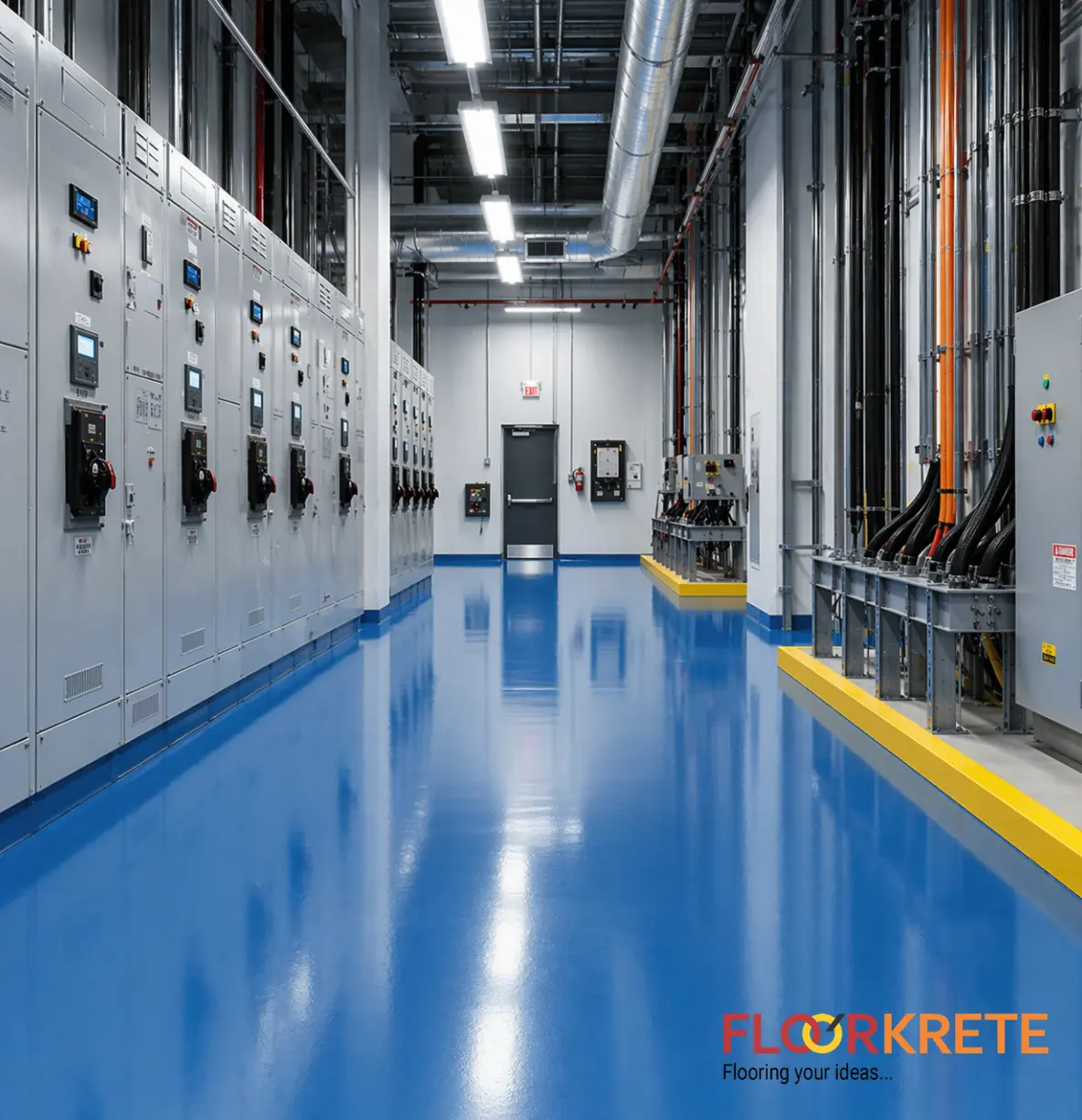
ELECTROSCREED-EPOXY DIELECTRIC INSULATION SCREED
ElectroScreed: Special epoxy resin based based self leveling dielectric insulation coatings
ElectroScreed: Special epoxy resin based based self leveling dielectric insulation coatings
Electrical floors often go through more stress than expected. Heavy equipment, constant movement, and electrical exposure slowly impact surface strength and safety over time.
An epoxy dielectric insulation screed helps create a strong and controlled flooring layer that supports both insulation and durability. It is designed for environments where electrical safety cannot be compromised.
For contractors, this is not just another flooring system. It becomes part of the overall safety and performance planning for the project.
An epoxy dielectric insulation screed is a high-build flooring system used to provide electrical insulation along with structural strength. It forms a thick, seamless layer over concrete surfaces.
Unlike thin coatings, this system works as a screed layer, which means it can also correct uneven floors while adding insulation properties.
This makes it suitable for areas where both surface leveling and electrical protection are required in one solution.
In electrical environments, the floor is not just a walking surface. It plays a role in controlling electrical risks, especially near active systems.
An electrical insulation screed reduces the chances of current leakage through the floor. It helps create a safer working condition for technicians and operators.
For builders, it adds long-term value. For contractors, it ensures compliance with safety requirements without adding complex systems later.
The screed resists electrical conductivity and helps maintain insulation across the entire floor surface.
It supports heavy equipment, machinery movement, and continuous industrial usage without surface failure.
It protects the floor from oils, chemicals, and water exposure common in industrial environments.
The screed remains stable under temperature changes and does not easily crack due to expansion or contraction.
It performs well in areas where machines create vibration or impact stress on the floor.
Industrial Insulation Flooring for Demanding Environments
Many industrial spaces require flooring that does more than just resist wear. It must also support electrical safety standards.
Industrial insulation flooring systems like epoxy screeds are widely used in such environments because they combine thickness, strength, and insulation properties.
This makes them a practical choice for long-term projects where reliability matters more than short-term savings.
An insulation screed for floors is used in multiple industries where electrical systems and safety go together.
Used in production and assembly areas where equipment operates continuously and insulation is important.
Applied in LT and HT substations to improve insulation and reduce electrical risks on floor surfaces.
Provides a safe working surface for operators handling live panels or maintenance tasks.
Suitable for controlled environments where electrical testing is carried out regularly.
Used in solar manufacturing and energy units where insulation and durability are both required.
Using an epoxy dielectric insulation screed offers practical benefits during installation and long-term usage.
It helps correct uneven floors while adding insulation, reducing the need for multiple systems.
The screed maintains its performance without frequent repairs or surface damage.
Supports project safety standards in electrical environments.
Creates a dense and durable surface that is easy to maintain over time.
This system works well in both new and existing projects. Contractors often use it in renovation projects where old floors need both repair and insulation upgrade.
An epoxy insulation screed can strengthen weak surfaces while improving electrical safety without major structural changes.
Proper surface preparation directly affects performance. Even a strong screed system needs a well-prepared base for effective bonding.
Basic steps include:
This helps achieve better adhesion and long-term insulation performance.
Floorkrete Electroscreed is designed for real working environments where both strength and insulation are required. It offers consistent performance under electrical and mechanical stress.
The system combines durability, insulation properties, and ease of application, making it suitable for contractors handling complex industrial projects.
It is a reliable choice when you need a flooring solution that supports both safety and long-term performance.