How Dielectric Insulation Coatings Can Revolutionize Safety in EV Manufacturing Plants
Electric vehicle (EV) revolution is still in full swing and it is estimated that EVs may take the place of 30-50 percent of traditional fuel powered cars in the coming decades. Such demand growth will unavoidably trigger a booming growth of EV manufacturing plants, and electrical safety is one of the primary concerns of manufacturers.
EV plants are vulnerable to electrical hazards as they increase in size. High-voltage equipment, battery assembly lines, charging stations, robotics, and a plethora of sensitive electronic systems are present in these facilities. The correct protection practices are essential to secure the health and safety of workers and equipment.
A workable solution is the dielectric insulation coatings. They are safer and more efficient to manufacture EVs because they provide useful insulations and safeguard against electrical faults to reduce risks in these complex environments.
Minimal electrical faults, water intrusion or insulation breakdowns can be the cause of major fire incidents, equipment damage, and unforeseen production halts. Such omissions can be especially expensive in booming industrial environments.
Dependable insulation is required in high-voltage equipment and that is why the dielectric insulation coatings are becoming an important safety measure to EV production plants.
Why EV Manufacturing Plants Need Dielectric Insulation Coating
1. High-Voltage Battery Systems
Modern EV battery packs typically operate between 400V and 800V, with next-generation platforms moving toward 1000V architectures. Workers handling assembly, testing, or charging are exposed to these high-voltage systems, making reliable insulation essential to prevent electric shock hazards.
2. Arc Flash and Arc Blast Incidents
Arc flashes occur when electrical current jumps through the air between conductors, creating sudden energy releases. Such incidents are extremely dangerous and a leading cause of industrial electrical injuries in high-energy environments.
3. Battery Thermal Runaway Events
Lithium-ion batteries store significant energy in a compact space, and under stress conditions like overcharging or internal damage, they can enter thermal runaway. This can lead to gas release, fires, explosions, and other electrical hazards if proper safeguards aren’t in place.
4. Ground Faults and Leakage Currents
Ground faults happen when electrical current unintentionally flows to the ground via conductive paths. Causes include damaged insulation, moisture, contaminated surfaces, or wiring faults, which can compromise worker safety and equipment reliability.
5. High-Power Charging and Testing Infrastructure
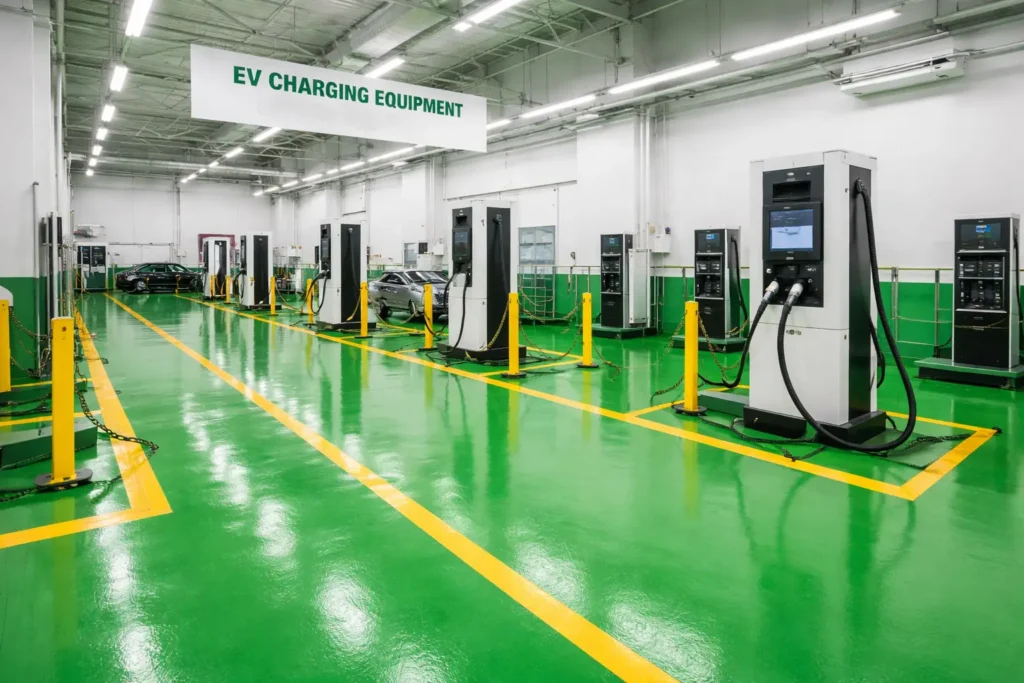
EV production facilities employ high-current charging and testing stations to simulate real-world driving scenarios. These modern DC fast chargers deliver immense power, making strict insulation and dielectric protection critical for safe operation.
Key Components in an EV Manufacturing Facility
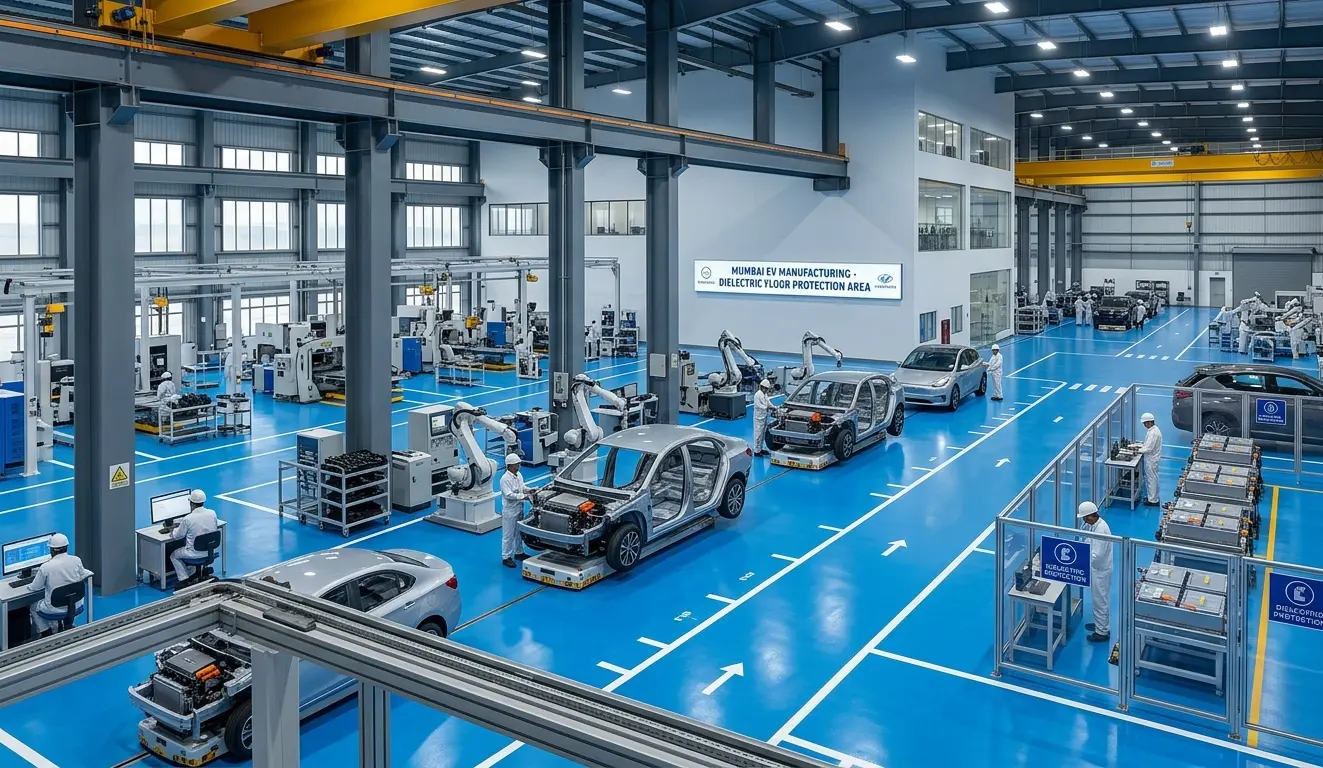
EV manufacturing plants contain sensitive and high-value equipment that must be carefully protected. These facilities rely heavily on high-voltage electrical systems, particularly in areas including:
• Battery Cell Production Unit
• Battery Pack Assembly
• Battery Testing Labs
• Power Electronics Production
• EV Charging Equipment Testing
• Automation Zones
• Electrical Control Rooms and Substations
These networked mechanism forms the core of EV manufacturing, where perfection, performance, and safety of vital infrastructure are fundamental for continuous production.
These interconnected systems serve as the backbone of EV manufacturing, where protecting critical infrastructure, ensuring precision, and maintaining reliability are vital for uninterrupted production.
Common Dielectric Safety Measures in EV Plants
1. Electrical Insulating Rubber Mats
These mats, made from high-dielectric rubber or elastomer, are designed to prevent current from passing through personnel to the ground.
Disadvantages:
• Mats can shift or move
• Wear and tear reduces effectiveness over time
• Frequent inspections and maintenance are necessary
• Limited resistance to heat or chemicals
Because of these limitations, industrial dielectric flooring and dielectric insulation coatings are increasingly becoming preferred alternatives in EV manufacturing plants.
2. Insulating Rubber Sheets or Carpets
Thinner and more versatile than mats, these sheets are often used for lining surfaces or fabrication areas where high-voltage insulation is less critical.
Disadvantages:
• Higher cost
• Complex installation
• Not environmentally friendly
• Limited resistance to heat and chemicals
3. PPE and Ground Protection Combination
Many facilities rely on layered protection, including insulating gloves, dielectric footwear, tools, and mats.
Disadvantages:
• Workers may forget to wear PPE consistently
• Risk of stepping outside the protective mat
• Mat dislocation can compromise safety
• Safety depends on all components functioning correctly
Emerging Alternative: Dielectric Floor Coatings
Dielectric coatings address the drawbacks of traditional insulation methods.
• Bond directly to concrete surfaces
• Form a seamless, continuous insulating layer
• Require less maintenance compared to mats or sheets
• Ideal for high-voltage zones and electrical panel rooms
Solutions like Electrogard dielectric Insulation coatings are increasingly adopted in modern EV manufacturing facilities to ensure reliable, long-lasting electrical protection.
What Is Dielectric Flooring?
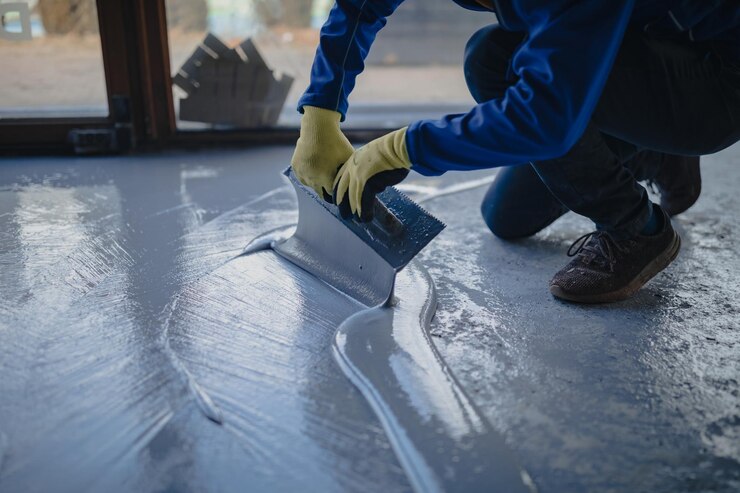
Dielectric flooring is a specialized insulating floor system designed to block the flow of electrical current through the floor. Applied directly onto the concrete substrate, it forms a seamless, continuous protective barrier.
This insulating layer provides multiple benefits:
• Reduces the risk of electrical shock
• Enhances overall workplace safety
• Protects sensitive electrical equipment
• Minimizes chances of electrical accidents
• Lowers grounding risks around high-voltage machinery
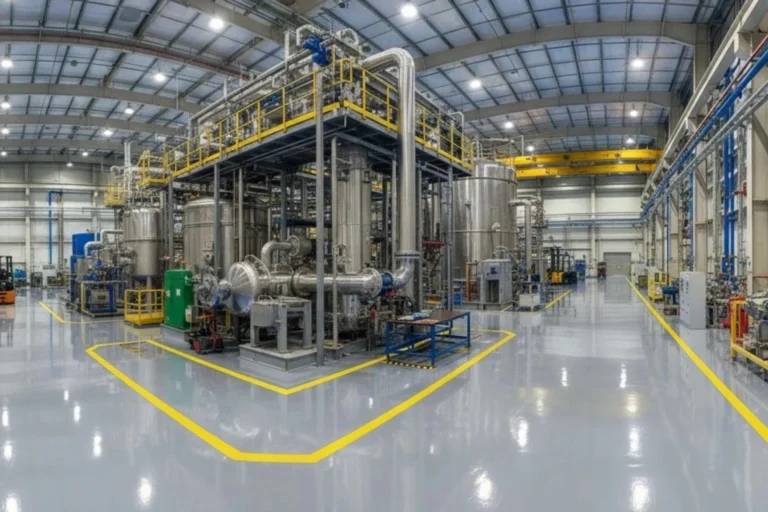
In EV manufacturing facilities, where high-voltage equipment are at risk, dielectric flooring serves as a critical layer of electrical insulation across the entire floor, ensuring both safety and reliability.
Key Zones for Dielectric Insulation Coating in EV Production Facilities
1. High-Voltage Control Rooms and Switchgear Systems
2. EV Battery Evaluation and Testing Facilities
3. Charging Station Test Zones
4. Transformer Rooms and Electrical Distribution Areas
5. Automated Production Lines and Robotics Workstations
6. Battery Module Assembly Sections
7. Servicing and Maintenance Zones for High-Voltage Equipment
Supporting the Future of Electric Mobility
As the production of EVs continues to accelerate, manufacturing facilities need to implement advanced safety solutions to safeguard both workers and critical infrastructure.
Dielectric flooring is more than just a surface coating—it acts as a vital safety layer for modern high-voltage production environments.
By replacing traditional insulation mats with a seamless industrial dielectric coating system, EV manufacturing plants can achieve:
• Superior electrical safety
• Reliable, long-term performance
• Increased operational efficiency
In a sector driven by innovation, safety solutions must advance alongside technology.
Floorkrete by Multichem provides specialized dielectric protection systems designed for high-voltage industrial facilities, ensuring the safety of both personnel and essential equipment.
Electrogard dielectric coatings deliver high dielectric strength, seamless coverage, and long-lasting durability for electrically intensive environments. Available in single- and two-component formulations with the added benefit of UV resistance, these coatings create safer production floors while protecting workers and sensitive equipment in EV manufacturing plants.
Speak With Our Technical Experts
If your facility requires advanced electrical insulation flooring, our team can help design the most suitable solution.
Request a consultation to explore dielectric flooring options tailored to your plant.
📩 For technical specifications, test reports, and project guidance, contact us at:
info@multichemgroup.net | +91 9619091025