Polyurethane Flooring Solutions for Industrial Floors: Durability, Flexibility, and Chemical Resistance
A warehouse lays a new floor coating and at first, all appears to be perfect.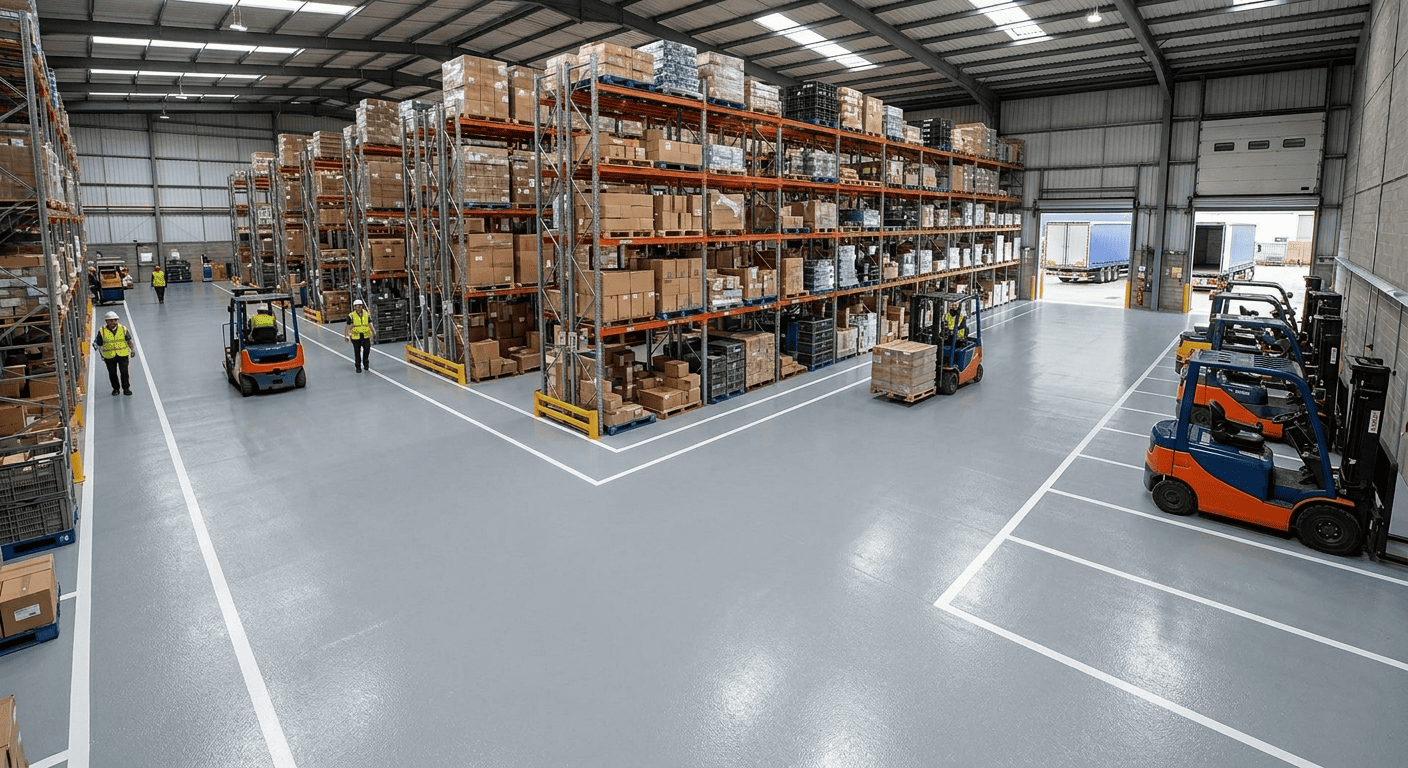
But after half a year, forklift wheels will start to raise parts of the coating and small bubbles will develop around expansion joints. After a year, large portions of the floor start peeling off.
Often, the problem begins subtly, a tiny bubble near a machine, a fine crack along a joint, or a small patch that starts to lift. Initially it does not appear to be a serious issue.
But over the following months, the damage spreads.
Cracks are aggravated by heavy forklift traffic. The chemicals percolate through the concrete, and entrapped moisture causes the coating to be pushed upwards. What was supposed to be a floor designed to last decades can start failing in just a few years.
That is why increasing numbers of industries are opting towards polyurethane flooring materials, which are more flexible, durable and resistant than the conventional industrial coatings.
Why Industrial Floors Fail
Industrial floors are under continuous pressure-mechanical, moisture, chemical, and temperature variations. When a floor coating is unable to withstand these conditions, signs of failure start to appear.
The following are some of the most frequent causes of industrial floor damage:
• Delamination or peeling off of the coating.
• Bubbles on the surface or blistering.
• Thermal movement causing cracks
• Wear and abrasion due to heavy traffic
• Damage due to chemicals or oil.
• Ongoing vibrations of machines.
• Movement of forklift and equipment.
Moisture: The Hidden Threat to Industrial Floors
Moisture in the concrete slab is one of the major causes of industrial floor failure. This is because as the water vapor ascends through the slab, it will exert pressure under the coating and, eventually, blistering, loss of adhesion or total delamination may occur.
Conventional stiff finishes are usually not able to handle this issue. A more compliant and robust solution, like polyurethane floor system, is needed to be durable in the long run.
Why Moisture Is So Problematic
Concrete surface may appear dry but most of the time it has water vapor within. This moisture gets trapped in the slab and flows upwards with time.
The application of a coating to a wet slab may lead to a number of problems:
• Blistering or bubbling
• Loss of adhesion
• Efflorescence (white salt deposits)
• Complete delamination
The causes of these problems are due to the increased moisture resulting in osmotic pressure under the coating, which forces the floor out of the concrete substrate.
The safeguarding of industrial surfaces with Polyurethane Flooring.
The current PU flooring systems are designed to deliver in adverse environments such as moisture, as well as variable temperatures.
The main advantages of PU Flooring are:
• Very tolerant to moisture in substrate.
• Smooth surfaces preventing the entry of water.
• Resistance to thermal shock and washdown cycles
• Lower risk of cracking, peeling, or delamination
Thanks to these advantages, polyurethane has become a preferred choice for industrial facilities that demand hygiene, durability, and long-lasting performance.
The Science Behind PU Flooring Flexibility
The elastic polymer structure is what makes polyurethane different to the traditional coatings.
Polyurethane is a cross-linked molecular network that is formed during the curing process by reacting polyols and isocyanates. This organization offers a special blend of:
• Flexibility
• Impact resistance
• Chemical resistance
• Abrasion resistance
Unlike rigid coatings, PU flooring can absorb stress and movement without cracking, making it ideal for industrial applications.
Why Flexibility Matters in Industrial Flooring?
Concrete slabs in industrial settings constantly expand and contract due to:
• Temperature fluctuations
• Machinery vibrations
• Heavy load movement
• Structural shifts in the building
Rigid coatings cannot accommodate these movements, leading to micro-cracks that eventually compromise the entire floor.
Polyurethane flooring, however, moves with the concrete slab instead of resisting it, significantly reducing the risk of cracks, peeling, and premature failure.
Application Thickness and System Types
Polyurethane flooring systems are available in varying thicknesses to suit different industrial and commercial needs:
| System Type | Typical Thickness | Recommended Application |
|---|---|---|
| PU Coating | 0.5 – 1 mm | Light-traffic areas |
| PU Self-Leveling | 2 – 4 mm | Commercial spaces |
| PU Screed | 4 – 9 mm | Heavy-duty industrial environments |
Thicker screed systems offer superior load-bearing capacity and enhanced impact resistance, making them ideal for high-traffic or heavy machinery zones.
Industries Benefiting from Polyurethane Flooring
Polyurethane flooring is widely used across a variety of industrial and commercial facilities, including:
• Food processing plants
• Pharmaceutical manufacturing units
• Chemical processing facilities
• Warehouses and logistics hubs
• Cold storage facilities
• Automotive workshops
• Commercial parking structures
Its combination of high abrasion resistance and flexibility allows these floors to withstand heavy machinery, constant traffic, and demanding operational conditions without rapid wear.
A successful industrial flooring system must therefore provide:
• Flexibility to accommodate structural movement
• Abrasion resistance to endure machinery and traffic
• Moisture tolerance to prevent blistering and delamination
Why Choose Floorkrete for Polyurethane Flooring
Selecting the right flooring system is only part of the solution. The quality of materials and professional installation expertise also play a critical role in long-term performance.
Floorkrete offers a specialized range of polyurethane flooring systems under its Floorthane® series, designed specifically for demanding industrial environments.
Floorthane® PU Flooring Systems:
• FloorThane PU100 – 3-component polyurethane system (2–4 mm) built for critical industrial environments requiring chemical resistance and durability.
• FloorThane PU200 – 2-component self-leveling PU system (0.5–2 mm), ideal for smooth, seamless floors in industrial and commercial spaces.
• FloorThane PU300 – 100% solids, 2-component pigmented PU coating providing a hard-wearing, high-quality floor finish.
• FloorThane PU400 – 3-component heavy-duty PU system (2–6 mm) offering enhanced durability for high-load industrial floors.
• Floorthane 5501 / 5503 / 5506 – Polyurethane floor toppings and self-smoothing systems designed for superior abrasion resistance and chemical protection.
Floorkrete’s Floorthane PU flooring range is engineered to deliver:
• High-performance, long-lasting PU floor coatings
• Excellent resistance to abrasion, chemicals, and moisture
• Seamless and hygienic surfaces suitable for industrial facilities
• Advanced solutions, including PU ESD flooring systems, for sensitive environments