Time to Upgrade from Rubber Mats to Dielectric Insulation Paint
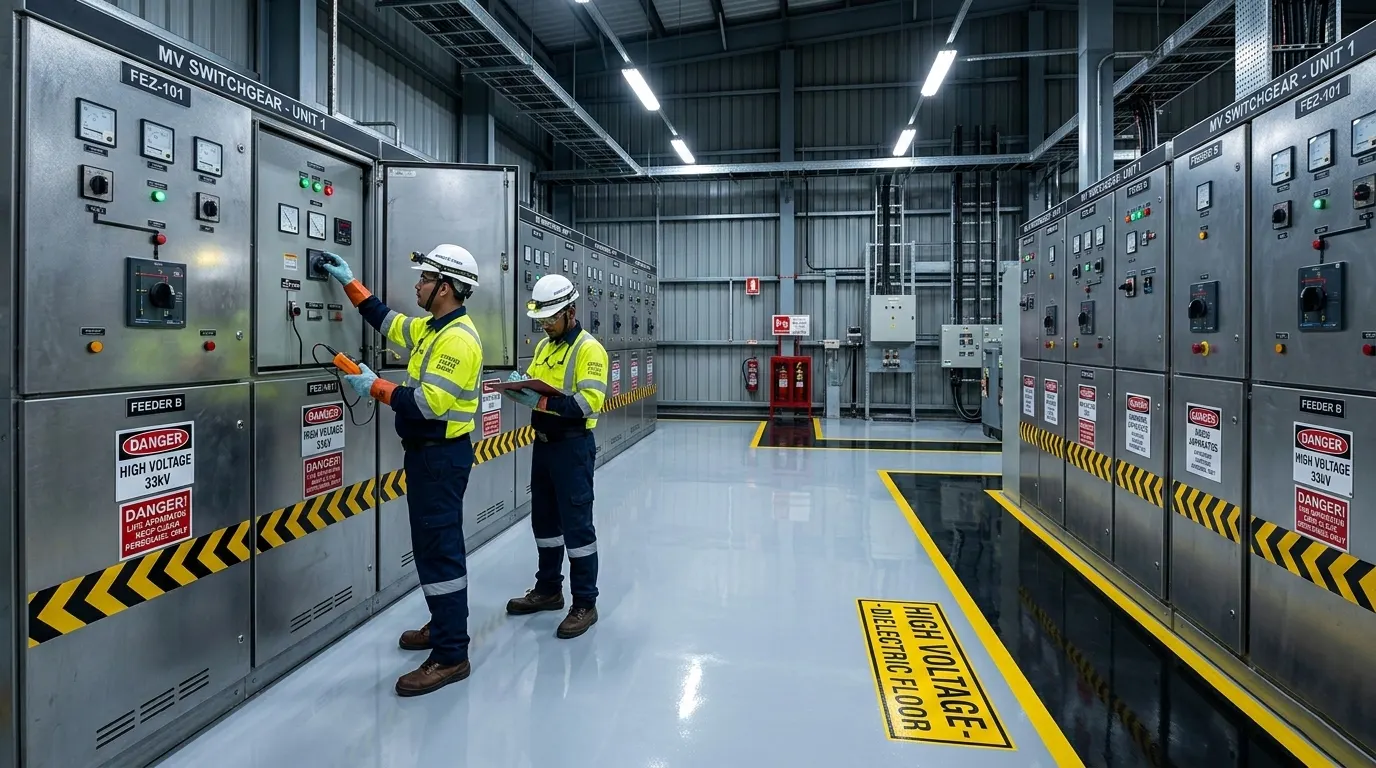
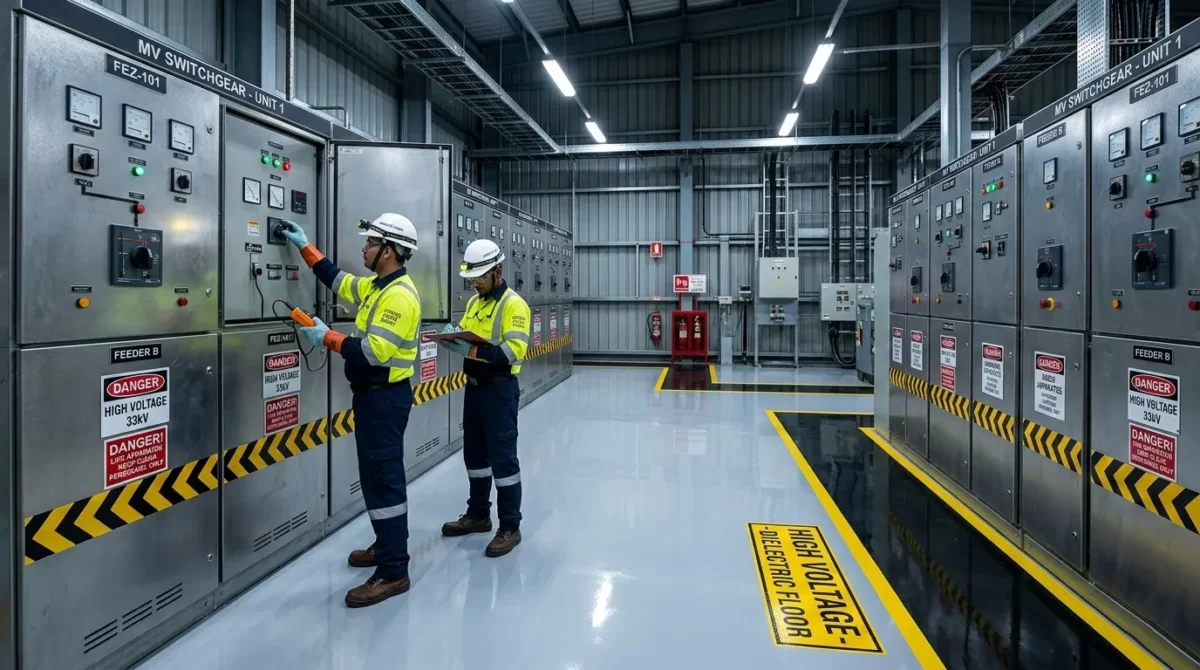
Electrical environments demand absolute safety. Even a minor insulation failure, moisture ingress, or micro-crack in the surface can create a path for electricity leakage, leading to severe equipment damage or safety hazards.
This is why Dielectric Insulation Paint is becoming an increasingly important solution in modern electrical infrastructure. It creates a high-performance insulating barrier on floors and surfaces, protecting both personnel and critical electrical systems while improving operational reliability.
What Is Dielectric Insulation Paint?
It is a specialized protective coating applied on floors and electrical surfaces to block the unintended flow of electric current.
This system is typically applied in liquid form and cures into a continuous, seamless insulating layer. Once hardened, it acts as a durable electrical insulation coating that prevents current leakage through the substrate.
Because it forms a monolithic layer without joints or gaps, the coating delivers consistent insulation across the entire surface.
Why Electrical Insulation Is Important
Electric current naturally travels through the path of least resistance. If insulation is inadequate, electricity may travel through floors, structures, or surrounding surfaces.
Applying a dielectric insulation coating provides an additional layer of protection by:
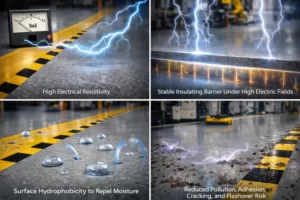
- Preventing current leakage through high surface resistivity
- Creating a continuous insulating barrier on the substrate
- Repelling moisture through hydrophobic surface properties
- Reducing the risk of electrical tracking and flashover
- Resisting dust, pollutants, and industrial contaminants
- Improving safety in high-voltage operating areas
By limiting current leakage pathways, the coating helps maintain safe working conditions even in demanding electrical environments.
Surface Protection and Longer Equipment Life
Apart from electrical insulation, it also provides surface protection against common environmental stress factors such as:
- Moisture
- Dust accumulation
- Industrial pollution
- Chemical exposure
When electrical surfaces remain protected, equipment performance improves, maintenance requirements reduce, and operational downtime becomes significantly lower.
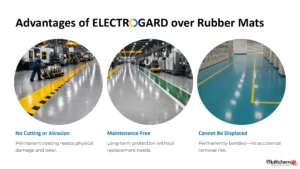
Traditional Solution: Rubber Insulation Mats
For decades, electrical panel rooms and substations have relied on rubber insulation mats for operator safety.
These mats are factory-manufactured rubber sheets placed on floors near electrical equipment to increase insulation between personnel and the ground.
Although widely used, rubber mats function as passive protection systems. Their effectiveness depends largely on correct placement and regular inspection.
Some of the common challenges associated with rubber mats include:
Frequent Replacement
Rubber mats gradually wear out with time due to foot traffic and environmental exposure. They require periodic inspection and replacement, increasing long-term operational costs.
Safety Risks
Since mats are not permanently fixed, they can shift from their position or become misaligned, which may expose operators to risk.
Physical Damage
Sharp objects, heavy equipment movement, or abrasion can damage rubber mats. Once damaged, their dielectric strength may reduce significantly.
Modern Approach: Dielectric Insulation Paint
Many industries are now adopting dielectric insulation paint systems as a more reliable alternative to movable insulation mats.
Unlike rubber sheets, the coating is applied directly onto the substrate and becomes an integral part of the floor or surface.
This results in:
- Seamless coverage without joints
- No loose edges or displacement issues
- Permanent bonding with the substrate
- Uniform insulation across the entire area
The result is a durable and engineered electrical insulation coating system designed for long-term performance.
Dielectric Insulation Paint vs Rubber Mats
| Category | Rubber Mats | Dielectric Insulation Coating |
|---|---|---|
| Installation | • Manually placed on the floor • Require accurate positioning • Not permanently fixed |
• Applied directly on the substrate • Seamless and continuous coating • Permanently bonded to the surface |
| Maintenance | • Require frequent inspection • Susceptible to wear and tear • Need periodic replacement |
• Minimal maintenance • Long service life • Excellent durability |
| Safety | • Can move or shift • Vulnerable to cuts and damage • Protection depends on placement |
• Cannot be displaced • Uniform insulation across the floor • More reliable safety performance |
Lifecycle Cost
Rubber mats may appear economical initially, but replacement costs and operational downtime increase total lifecycle expenses.
A dielectric insulation coating system requires a higher initial investment but offers substantial savings over time due to durability and minimal maintenance.
Where Is Dielectric Insulation Paint Used?
Dielectric coating systems are commonly installed in areas where electrical safety is critical, including:
- Electrical substations
- Switchgear rooms
- Transformer areas
- Power generation plants
- Data centers
- Industrial manufacturing facilities
- Electrical control rooms

These environments demand reliable insulation systems capable of withstanding high voltage conditions.
Service Life of Dielectric Insulation Paint
The typical service life of a dielectric insulation coating ranges between 8 and 15 years, depending on environmental conditions and application quality.
In controlled indoor environments such as switchgear rooms, the lifespan can be even longer when proper maintenance practices are followed.
Several factors influence the durability of the coating:
- Quality of surface preparation
- Type of coating system used (epoxy, polyurethane, acrylic)
- Application thickness
- Mechanical traffic and abrasion
- Exposure to moisture, chemicals, or UV radiation
For instance, dielectric epoxy coating systems installed in heavy industrial zones may experience more wear compared to coatings in low-traffic electrical rooms.
Tips to Extend Coating Life
To ensure maximum performance and durability:
- Prepare the substrate properly before application
- Follow recommended coating thickness guidelines
- Avoid dragging sharp or heavy equipment across the surface
- Conduct periodic visual inspections
When professionally installed, this systems provide reliable long-term protection with minimal maintenance.
Is Dielectric Insulation Paint Right for Your Facility?
Facilities operating high-voltage electrical systems cannot rely solely on movable insulation mats.
A properly designed electrical insulation coating system offers permanent protection, improved safety compliance, and reduced maintenance concerns.
For industries prioritizing operational safety and reliability, dielectric insulation paint represents a practical long-term investment.
Common Mistakes to Avoid
When installing dielectric insulation coatings, avoid the following mistakes:
- Applying the coating on damp or wet concrete
- Inadequate surface preparation
- Using low-quality or non-certified materials
- Ignoring dielectric strength testing requirements
Proper installation ensures the coating performs effectively throughout its intended service life.
Final Thoughts
Rubber insulation mats have been used in electrical rooms for decades, but they are temporary solutions that depend heavily on correct placement and routine replacement.
In contrast, dielectric insulation paint permanently bonds to the substrate, forming a seamless insulating barrier that cannot be displaced or easily damaged.
While the initial investment may be higher, the long-term advantages include better safety, reduced maintenance, and improved lifecycle performance.
For facilities planning new electrical infrastructure or upgrading existing systems, dielectric coating systems offer a smarter and more dependable approach to electrical safety.
Floorkrete ElectroGard Dielectric Flooring Systems
Multichem by Floorkrete offers advanced dielectric insulation systems designed for reliable electrical protection.
The product range includes:
Electrogard SLI
Single-component system designed for easy application and seamless insulation performance.
Electrogard ELI
Two-component epoxy-based system developed to protect against sudden electrical discharge and flashover conditions.
ElectroScreed
Self-levelling dielectric epoxy coating screed designed for high-performance electrical insulation flooring.
With advanced formulations and durable performance, Floorkrete ElectroGard systems convert ordinary floors into dependable electrical safety barriers.
Frequently Asked Questions
Is dielectric insulation paint waterproof?
Many dielectric coatings offer water-resistant or hydrophobic properties that help protect the substrate from moisture penetration.
How long does dielectric epoxy coating last?
With correct application and maintenance, dielectric epoxy coatings typically last between 8 to 15 years.
Is dielectric insulation paint better than rubber mats?
In many cases, yes. It provides a permanent and seamless insulating barrier, whereas rubber mats are movable and require regular inspection.
Do rubber mats provide the same protection as dielectric coatings?
Rubber mats offer temporary insulation, but they depend on correct placement and can deteriorate over time.
Which option is safer for electrical rooms?
A professionally applied electrical insulation coating generally offers more reliable and consistent protection compared to loose insulation mats.
Recent Post